


News
Commercial Update Certification Programme Manufacturing Investment and Specialist Product Launches
October 2026
HOLI Scale is issuing this October 2026 update to explain a targeted price adjustment, the company's expanded programme for OIML load-cell approval, its investment in force-measurement equipment, and the international launch of specialist mining and aviation weighing systems. The commercial change applies only to selected weighing accessories. Complete weighing systems that are quoted against current costs will continue to be priced individually.
At the same time, HOLI Scale is increasing its technical capability. The company is working with NMi in the Netherlands on a programme intended to secure OIML approval for five important load-cell families during 2027, subject to successful testing and certification. More than US$500,000 has also been committed to equipment for load-cell testing and manufacture. These measures are intended to improve engineering control, expand production capability and give international partners a broader choice of verified components and complete weighing systems.
Targeted Price Adjustment for Weighing Accessories
HOLI Scale has decided to increase the selling price of load cells, junction boxes and weighing indicators by 5%. The decision reflects the fall of more than 5% in the US dollar against the Chinese yuan across the company's recent pricing period. Because many export quotations are issued in US dollars while a substantial proportion of manufacturing expenditure is paid in Chinese yuan, this exchange-rate movement has reduced the yuan value of export revenue and increased pressure on component margins.
The adjustment is deliberately limited in scope. It applies to load cells, junction boxes and indicators supplied as individual accessories or spare parts. It is not intended to create an automatic 5% increase across every HOLI Scale product. Complete weighing systems that are already quoted on a real-time basis will continue to be calculated from the cost position at the time of quotation. Relevant factors may include steel and aluminium prices, electronic components, load cells, production labour, exchange rates, packing and international logistics.
Customers and distributors should therefore request an updated quotation before placing a new order and should check the stated quotation-validity period. Where a quotation or purchase arrangement is already open, the applicable price should be confirmed with the responsible HOLI Scale account manager. This approach provides commercial clarity while allowing the company to maintain the specified materials, inspection procedures and product performance expected by long-term partners.
OIML Load Cell Certification Programme for 2027
HOLI Scale is preparing a broader OIML certification programme for its load-cell portfolio. The planned programme covers double-ended shear beam load cells, bellows load cells, compression load cells, shear beam load cells and S-type load cells. These designs serve different weighing applications, from platform scales and tank systems to weighbridges, vehicle scales, force-measurement assemblies and specialist industrial equipment.
The company is working closely with NMi in the Netherlands and is targeting OIML approval during 2027. Approval remains subject to the successful completion of the required technical evaluation, testing and certification process. The work will be aligned with the applicable requirements of OIML R 60, which addresses the metrological performance of load cells used in weighing instruments.
A wider range of OIML-approved load cells would support HOLI distributors, original equipment manufacturers and system integrators that require recognised metrological documentation. It would also simplify the selection of compatible load cells for new weighing projects. HOLI Scale intends to combine certification work with tighter control of production testing so that certified designs can be manufactured consistently after approval.
Double-ended shear beam load cells for high-capacity platforms, weighbridges and vehicle weighing systems
Bellows load cells for lower-capacity industrial weighing and process applications
Compression load cells for tanks, silos, weighbridges and other high-load systems
Shear beam load cells for floor scales, platform scales and industrial modules
S-type load cells for tension and compression force or weight measurement
Investment in Load Cell Testing and Manufacturing Capability
HOLI Scale has invested more than US$500,000 in the purchase and manufacture of force-measurement, load-cell testing and production equipment. The programme includes deadweight machines, force-comparison machines and associated systems required for development testing, production verification and engineering analysis.
A deadweight machine applies a known force through calibrated masses under controlled conditions. This provides a direct and stable reference for examining the response of a load cell at defined test points. A force-comparison machine transfers and compares force through reference equipment, allowing engineers to evaluate load-cell output across a wider working range. Each method has a different role, and the combined capability gives HOLI Scale greater flexibility when assessing different load-cell types and capacities.
The expanded equipment is intended to increase the number and range of tests that can be completed in house. It will support evaluation of repeatability, linearity, hysteresis, creep, zero return, temperature-related behaviour and overload performance where applicable. It will also help the manufacturing team identify variation earlier, improve process control and prepare technical evidence for certification projects.
Investment in test equipment does not replace independent approval or external calibration where these are required. It strengthens the internal engineering process that precedes external evaluation and supports more consistent production after a design has been approved.
Portable Mining Truck Scale for Industrial Mining Weighing
HOLI Scale is formally introducing the AXM Series portable mining truck scale to international markets. The system has already operated in a range of Chinese mining environments for more than five years. HOLI Scale reports that the completed tests and operational feedback have been consistently positive, providing a practical foundation for wider international promotion.
A mining truck scale must measure vehicles that are substantially larger and heavier than conventional road trucks. Off-road haul trucks also operate in locations where a permanent weighbridge may be difficult, expensive or unnecessary. The AXM system addresses this requirement through portable weighing platforms that can be positioned beneath individual wheels or wheel groups. Depending on the selected configuration and weighing procedure, the system can provide individual wheel loads, axle-group loads and total vehicle weight.
This form of industrial mining weighing helps an operator compare actual payload with the intended loading target. Reliable weight data can support payload control, tyre and suspension management, fleet analysis, production reporting and the investigation of uneven loading. The information can also help a mine reduce repeated overloading or underloading, although operational decisions must remain within the vehicle manufacturer's limits and the site's approved procedures.
The portable wheel scale format allows the equipment to be moved between suitable weighing locations. It reduces the need for the extensive civil works associated with a full-length permanent weighbridge. A portable mining truck scale still requires a stable and appropriately prepared weighing area, correct platform alignment, suitable approaches and trained operators. Surface condition, vehicle position, operating method and calibration status can all affect the result.
When a mine needs to weigh a mining truck, the correct system configuration should be selected from the vehicle's gross weight, individual wheel load, tyre size, wheel track, axle arrangement and intended weighing method. HOLI Scale can review these parameters before proposing an AXM configuration. This engineering review is particularly important when the customer intends to weigh a dump truck, haul truck or other off-road vehicle with a non-standard arrangement.
Portable installation for mine sites, quarries and temporary weighing locations
Measurement of individual wheel, axle-group and total mining truck weight
Heavy-duty structures designed for high-capacity off-road vehicles
Wired or wireless communication options for different operating environments
System configurations published for capacities up to 800 tonnes
Aircraft Scale and Aircraft Weighing Applications
HOLI Scale is also formally introducing its specially designed AC and ACM aircraft scale systems to the international market. The equipment has been used by a Chinese aircraft manufacturer for more than five years and has accumulated more than 1,000 operating hours in a Chinese aircraft maintenance workshop. This service history has allowed the company to assess the system under repeated manufacturing and maintenance conditions.
Aircraft weighing normally requires several low-profile platforms to be positioned beneath the aircraft wheels. Each platform measures an individual wheel load, while the central weighing terminal collects the readings and calculates the combined weight. Accurate individual readings also support the determination of load distribution across the landing gear. Depending on the approved procedure, the resulting data may be used during manufacturing, maintenance, modification or formal weight-and-balance work.
HOLI Scale reports that its aircraft weighing technology contributed to weighing and balance activities associated with the AVIC AG600 programme. The AG600 is recognised as the world's largest amphibious aircraft in operation. The application required dependable multi-point measurement and careful control of the weighing process.
Aircraft weighing is a controlled technical procedure. The aircraft must be prepared in accordance with the aircraft manufacturer's approved instructions, and environmental conditions must be suitable for stable measurement. Platform identification, wheel position, levelling, tare values, fluid status and the condition of connected equipment must be checked before the final readings are accepted. The work should be performed by qualified personnel and recorded within the operator's applicable maintenance and airworthiness system.
The HOLI AC and ACM ranges use low-profile weighing platforms and intelligent indication. Wired and wireless configurations are available for different hangar and maintenance requirements. Published platform capacities range from 5,000 kg to 40,000 kg per platform, depending on the selected model. The correct aircraft scale should be chosen from the maximum wheel load, wheel dimensions, landing-gear arrangement, required platform quantity and the aircraft manufacturer's procedure.
Air Cargo Weighing and Airport Logistics
Air cargo weighing is a separate but closely related part of aviation weight control. Airlines, cargo terminals, freight forwarders and airport warehouses need reliable weight information for pallets, containers, unit load devices, loose freight and other consignments. The declared cargo weight affects billing, handling, load planning and the information used to prepare an aircraft for departure.
HOLI Scale can provide platform scales, floor scales, pallet truck scales and customised cargo weighing systems for these applications. The appropriate solution depends on whether the operator needs to weigh air cargo as individual packages, complete pallets, containers or loaded handling equipment. A low-profile floor scale may suit trolleys and containers, while a pallet truck scale can combine movement and weighing during warehouse operations.
To weigh air cargo correctly, the operator should confirm the scale capacity, platform dimensions, division size, tare method and data-recording requirement. The scale should be positioned on a suitable surface and used within its rated capacity. Where cargo is weighed with a pallet, trolley, container or unit load device, the associated tare value must be applied correctly to obtain the net cargo weight.
Reliable air cargo weighing reduces disputes caused by incorrect declared weights and gives cargo teams better information for handling and loading. It does not replace the airline's approved load-control process. Weight information from warehouse equipment must be transferred and used in accordance with the relevant operator, airport and regulatory procedures.
Working with HOLI Scale
Customers may contact HOLI Scale to request an updated accessory quotation, discuss the 2027 load-cell certification programme, or obtain a technical proposal for a mining truck scale, aircraft scale or air cargo weighing application. For specialist systems, providing accurate vehicle, aircraft, cargo and site information at the enquiry stage will allow the engineering team to recommend a more suitable configuration.
HOLI Scale will continue to develop complete weighing systems and their principal components through coordinated mechanical design, electronics, load-cell engineering, production testing and international technical support.

Latest News
![]() Oct 01, 2026HOLI Scale Newsletter October 2026portable aircraft weighing scale
wireless aircraft weighing system
low profile aircraft scale
aircraft wheel load scale
aircraft weight and balance scale system
aircraft maintenance weighing equipment
aircraft MRO weighing scale
aircraft undercarriage weighing scale
aircraft wheel weighing platform
portable aeroplane weighing equipment
air cargo weighing scale
air freight weighing system
portable air cargo scale
ULD cargo weighing scale
dairport cargo weighing equipment
air cargo pallet weighing system
air cargo platform scale
weigh air cargo pallets
weigh aircargo containers
airport warehouse cargo scale
aircraft cargo floor scale
aviation cargo weighing solutionLearn More →
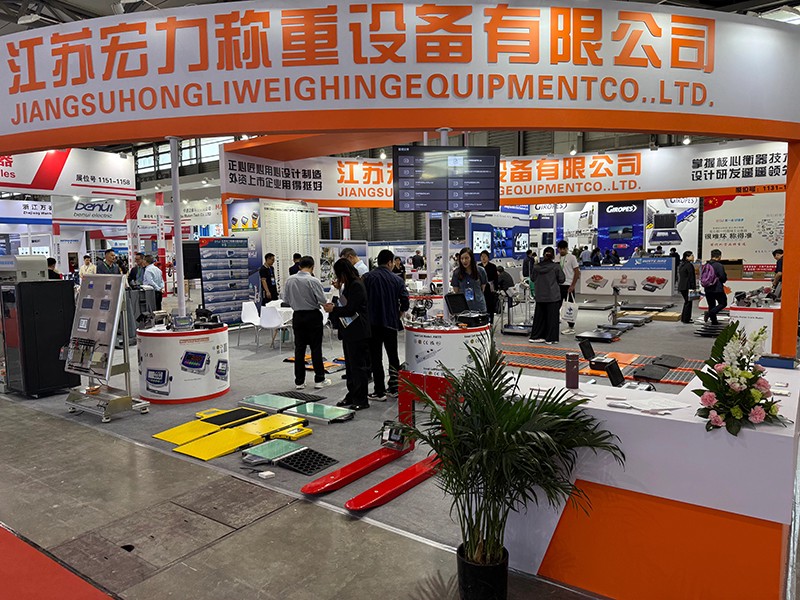
 May 07, 2025HOLI Scale Presented in Interweigh 2025 ShanghaiShanghai, China – April 29, 2025 – HOLI Scale, a globally recognized weighing scale manufacturer, proudly participated in InterWeigh 2025, held from April 26 to April 28 at the Shanghai New International Expo Center.
Learn More →
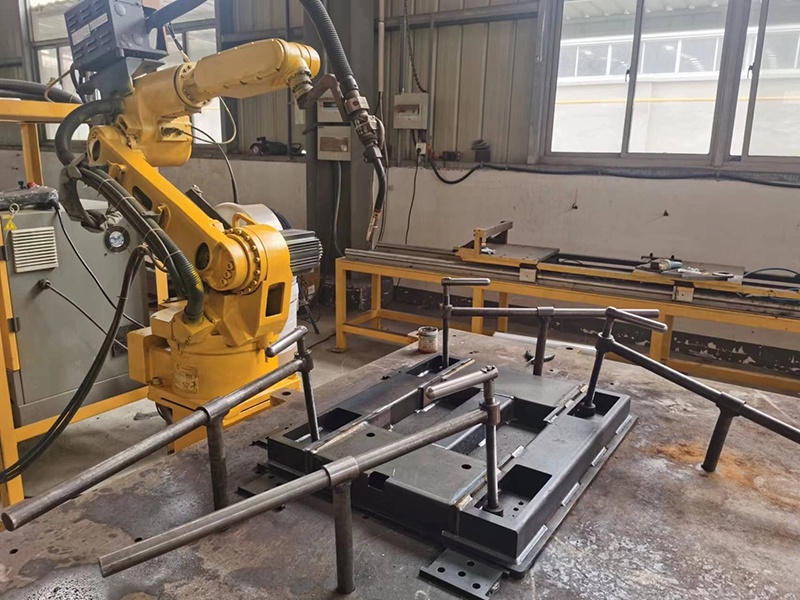
 Jun 11, 2024Holi Scale Revolutionizes Production with Welding RobotsHOLI Scale China, a trusted floor scale manufacturer known for its commitment to innovation and quality, has recently introduced an advanced robotic welding system into its production line.
Learn More →
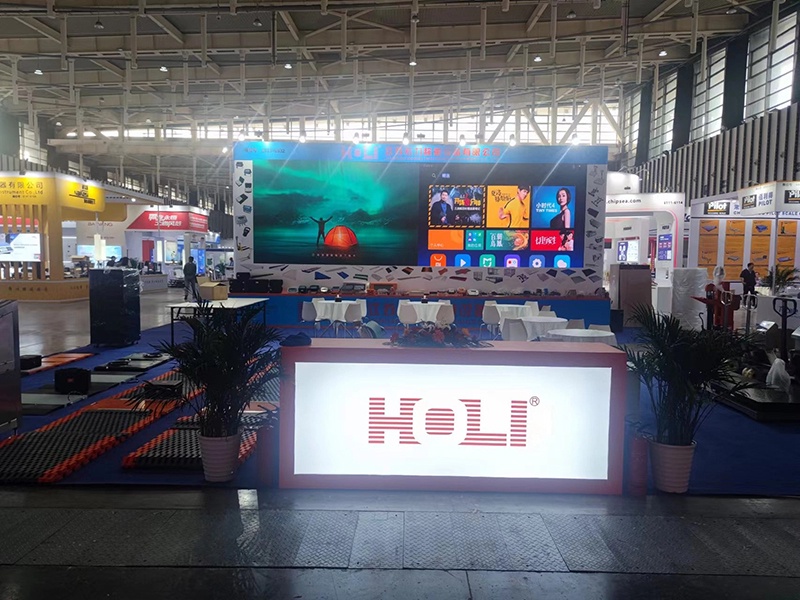
 Aug 10, 2023HOLI Scale Takes the Spotlight at Interweigh 2023 Nanjing Exhibition with New Achievements and Product InnovationsThe much-anticipated Interweigh 2023 Nanjing Exhibition, held from April 20 to April 22 at the Nanjing International Expo Center, welcomed numerous revered companies from the weighing industry.
Learn More →

Get In Touch